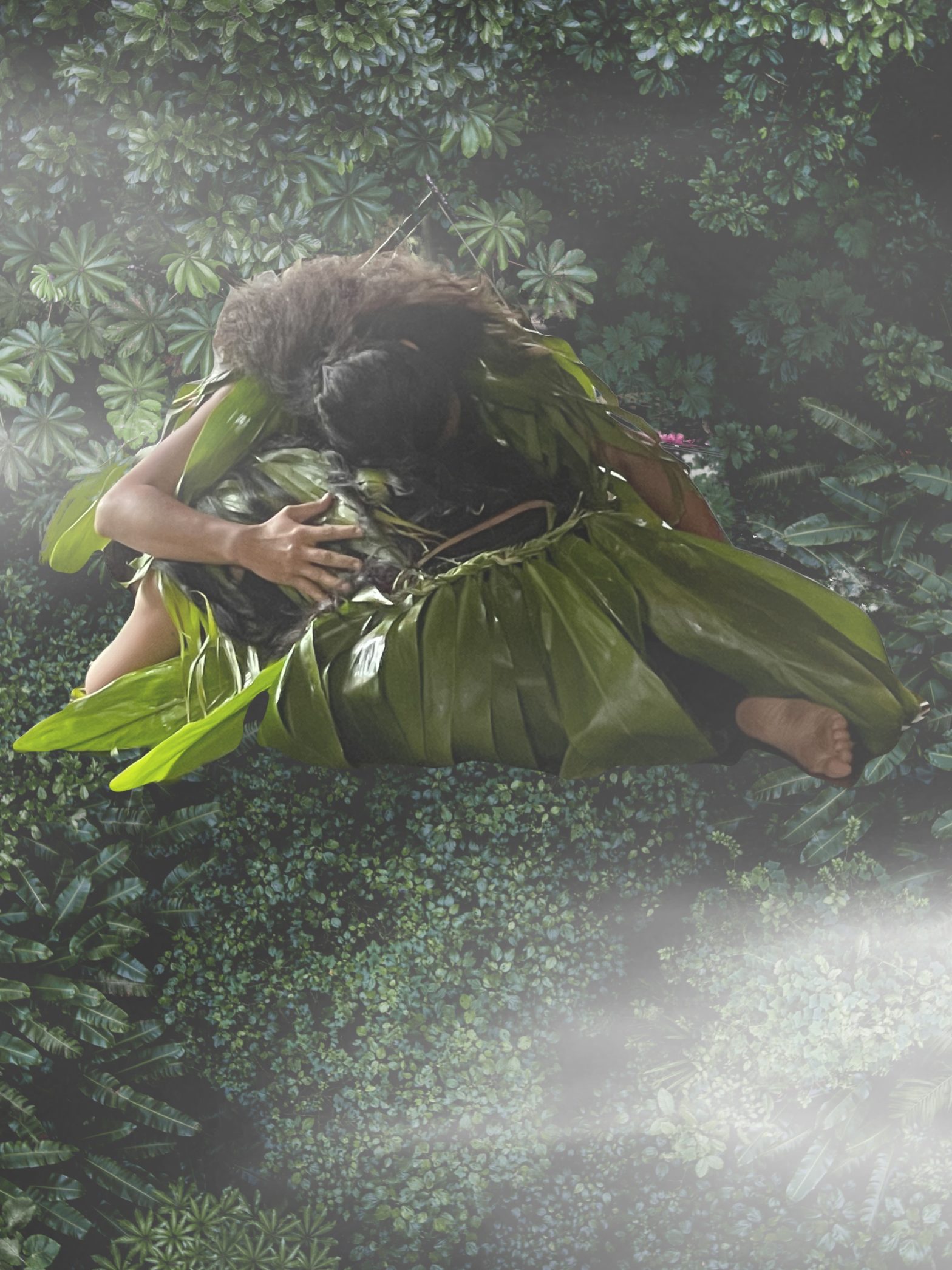
Hani lep he rua were twins that often presented themselves in the form of two Armea birds. The Armea bird is a sacred bird found only in Rotuma and was significant to many Rotuman stories and in particular linked to royalty, to the sacred, and renowned for its precious red feathers.
Category: Uncategorized
-
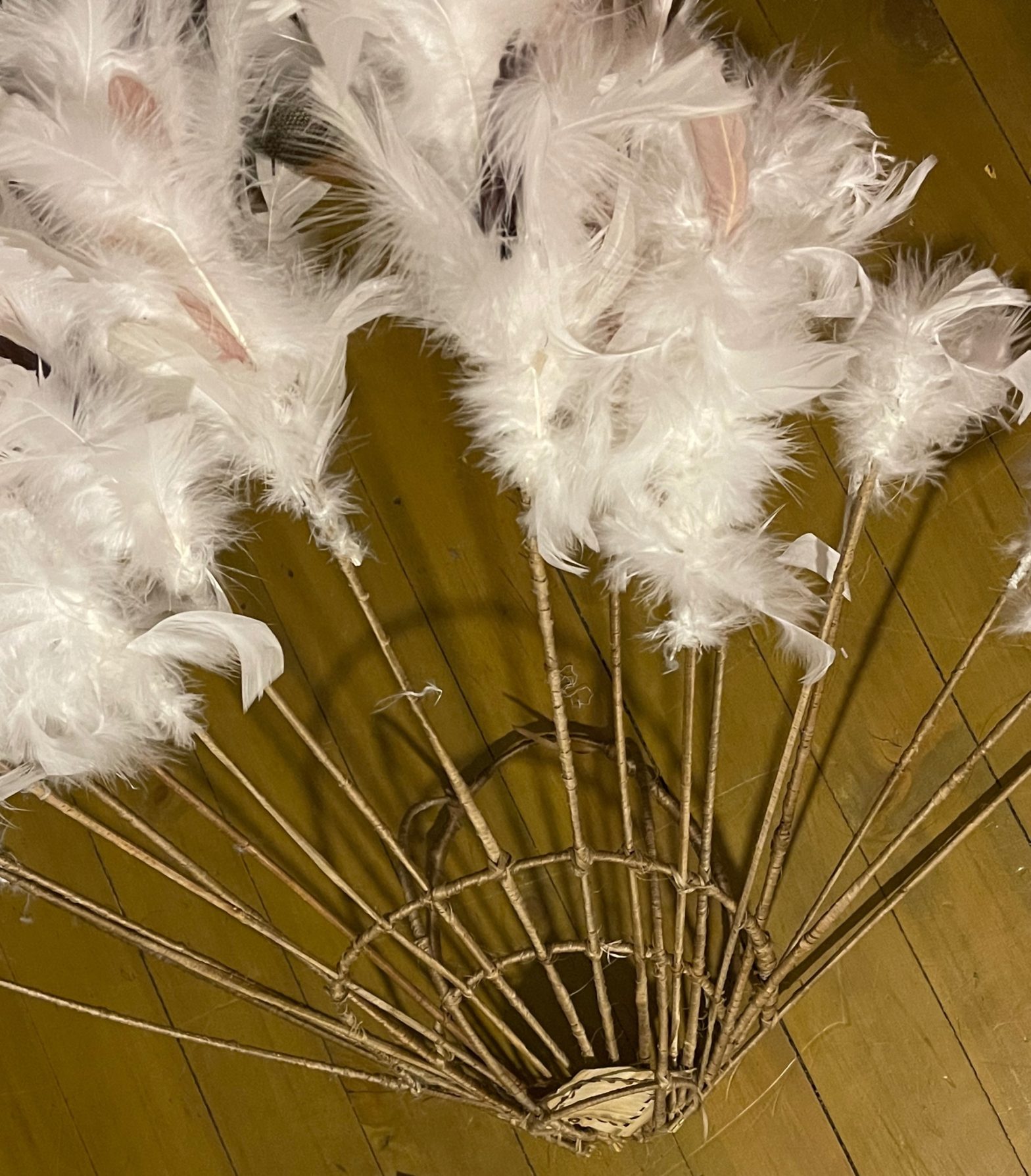
Suru
Suru was originally worn during war times and later became an headdress for dances that depicted war
Throughout the mapping process I found only one physical artefact of the Suru which is currently held in the British Museum as well as sketches and photos.
Further archival research of explorers notes mentioned the head dress called the Suru in notes by Gordon MacGregor on the Rotuma web. In MacGregors consultation with Rotuman consultants, he noted,
“the suru was worn by commoners. Peaked head-dress, decorated with feathers.. these hats were worn in war and signified fighting.. it was tabu for anyone in time of peace to wear any sort of headdress or head band… this was explained as a privilege allowed men who were about to die”(1932).
The Suru was the first piece that we collectively decided to remake. As knowledge is still developing around the art piece, we felt that remaking the Suru would aid our storytelling sessions with Elders and could stimulate conversation..
In the process of revitalising the Suru – every storytelling session, revealed more knowledge, and the headdress became more than an object, it revealed stories of warriors, chants, places, spaces and knowledge systems. Discussions around the materials used in the making of the Suru then sparked stories about the bird Taväke from which the feathers came, which sparked stories of our To ‘a, our warrior giants, who would wear the Suru in battle.
These discussions then sparked reflections around the disconnection from place and loss of knowledge of our homeland ecologies. For some they may see a mere database of artefacts collected, but for our communities it is a tapestry, doorway that reveals pathways of stories each that hold within them a story of person and place, relationships, connections.
During one our storytelling sessions, one of the Elders was able to explain her knowledge of the Suru. She noted,
“in 1981, that’s the last time that I have ever seen the Mak Koloa’ ta, war club dance, with the full traditional costume being worn… the Suru, the headpieces, the commoners would wear it too”(Participant).
She also noted that,
“my father had all these pieces and it’s unfortunate that we threw it all away and we never knew that times like this is why we keep this”(Participant).
We later found videos of this performance on YouTube:
Video 1: see 2.05 – 2.33:
Video 2: see 5.35 – 6.34:
As I began discussions with my father about my project and the discovery of this headdress. He proceeded to go upstairs into our family documents and extracted an envelope that mapped out our family genealogy as well as information on cultural protocols and processes written by elders in our clan. Within this was sketches of the Suru and one of the chants associated with it called the Kauta. It was incredible to discover that information that some of the gaps in knowledge on the Suru that I had not found in any museums and archives was right in my own home. Throughout this process, many of us reflected that we sometimes never know the significance or relevance of the knowledge our family elders may have. I realised that for the most part this was due to the fact that as busy, urban dwelling peoples, the relevance of this information has diminished and we see time as limited, so we just don’t take the time to hear these stories. It was a wonderful moment spent talking with my father about family connections and histories.
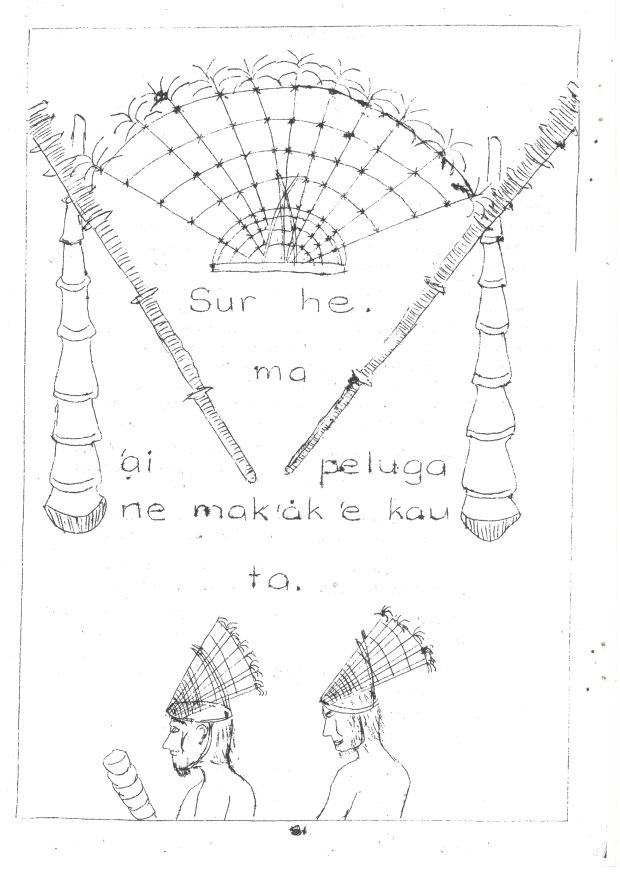
Image: Excerpt from an unpublished family manuscript compiled by Ilisapeti Inia and Etike Eliesa -

‘Ol’ol, Olioli, Ololi
The Ololi was a girdle worn around the waist that was covered in the red Armea bird feathers
Stories, chants, songs that record knowledge and are passed down from our grandparents and parents and family, we know is meaningful but sometimes as young people we do these practices out of duty and respect but sometimes we don’t delve deep into the meaning of songs and chants and often we don’t put the pieces together. For example in one of our storytelling session, the artists talked about a particular piece called the Olioli.
The Olioli was one of the pieces we had very little information about, but that we had particular interest in because it noted that it was a loin cloth. We discussed that we knew of the use of tit ves ves, natural fibre skirt made from the hibiscus tree bark, but had not heard we wore loincloth similar to Tahitian and other Polynesian counterparts. Gardiner had also discussed this piece,
“Another dress, pertaining to some of the officers, was the ololi; it appears to have been really a sort of apron, made of a fine mat, and hung down in front. It was almost completely covered with the red feathers of the arumea (Myzomela chermesina, Gray); its use was restricted to particular feasts..”
During the storytelling sessions one of the participants noted,
“ Oli oli… My understanding of this particular word..we had actually danced to a tiap hi and it had this word in it. And so the lyrics it talked about sort of like a garland..“So, like when I first heard, I thought it was a garland…” (Artist)
This same participant later consulted with an Elder to gain more insight into this piece and he noted,
“the pronunciation was the ‘ol’ol” (Participant).
-
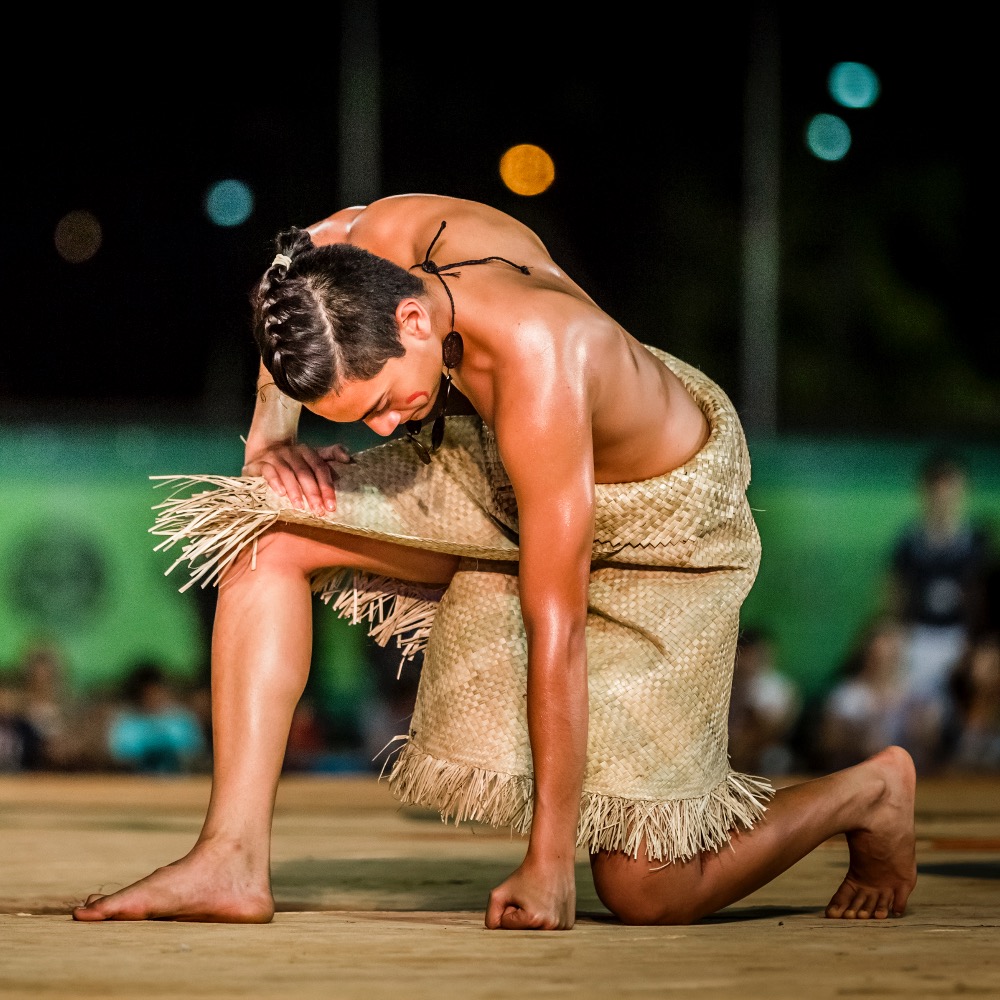
Titi
There were a couple of Titi present in the British Museum and the Auckland museum but as noted above in Gardiner’s notes and from conversations with Elders and Artists there was something quite different and distinct about the Titi Malheta.
Original labelling and curators notes:
“Waist garment made of light plaited fibre (hibiscus bark), with fibre tassels, worn by men and was collected about 1895. Christy collection registration slip description, Long strip of finely plaited grass cloth with a fringe. Obsolete dress” (British Museum)
There is also a piece in the Auckland Museum which can be seen in this link Titi, Auckland Museum
which noted that there were specific orange and brown stains which could possibly be mena that was used to stain Titi as outlined by one of the Elders.
-
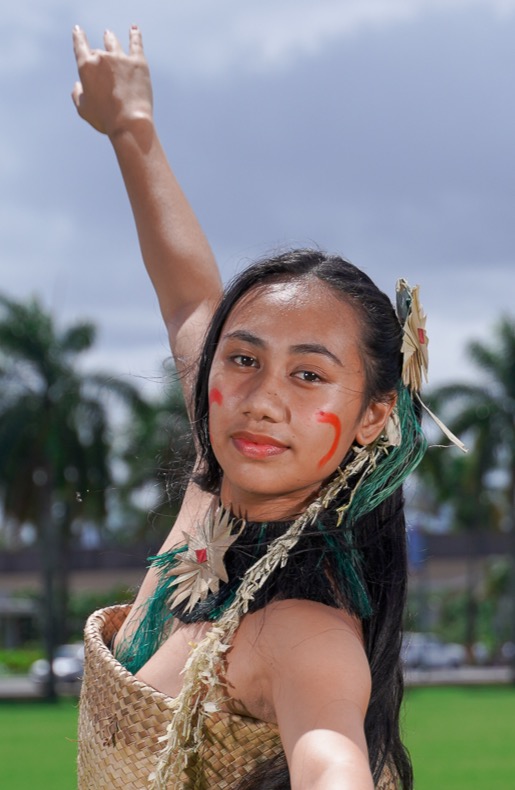
Mena
Mena, was a sacred adornment paste. When used to dye cheeks of dancers it was called nin fau. It was also used to dye titi and other fibre adornment.
One of our elders Ilisapeti Inia talked about Mena,
“The only paint in use on the body was made from the turmeric plant, or mena”. The purple stain, before mentioned, is used to smear the cheeks for dancing to give them a colour, and also for picking out some of the tattoo marks with, but the ordinary stain for the latter is made from the soot of the seeds of the hifo tree..”http://www.rotuma.net/os/ceremonies/mena.htm
Dillon,1829
“Women are generally besmeared with a mixture of turmeric and cocoa nut oil, which gives them a reddish appearance”
1830 –
Both sexes paint themselves with a mixture of the root of the turmeric plant (curcuma longa) and coco-nut oil – Called Rang
Robert, 1832
“The chiefs generally wear their hair in a knot upon the top of the head. They use a preparation of red ochre and yellow saffron, mixed with cocoa-nut oil, which they rub upon their bodies”
Edward, 1849
“Male and female lubricating their bodies with a yellow powder made from the root of the tumeric, mixed with oil”
1875
Many of them stain their hands and skin with turmeric
Boddam-Whetha,1876
“practice of lubricating their bodies with a yellow powder made from the root of the turmeric mixed with oil. Women by this point were fined for not wearing bonnets”
1885
Seldom anointed with turmeric.
1898